
Hazardous Material Shipping
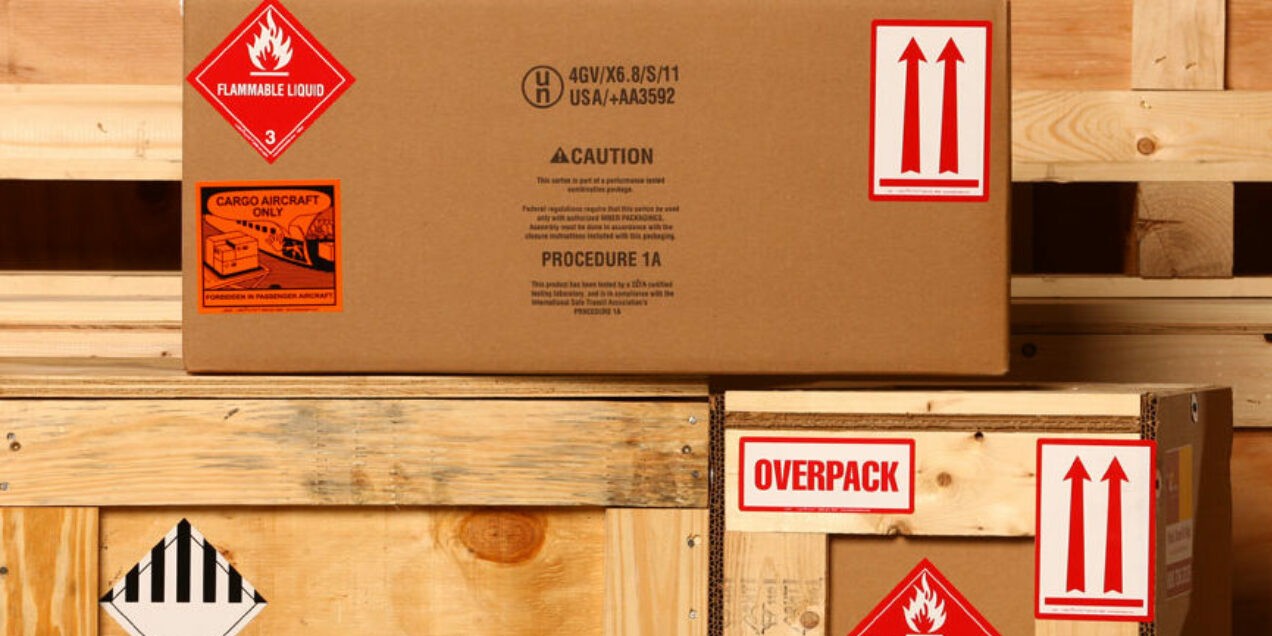
At the University of Texas at El Paso (UTEP), the Environmental Health & Safety (EH&S) Office is here to help faculty, staff, and students navigate the safe and compliant shipment of hazardous materials and dangerous goods. Whether you are shipping biological materials, chemicals, radioactive substances, compressed gases, dry ice, lithium batteries, or research samples, EH&S will guide you through the process to ensure every shipment meets the requirements set by the U.S. Department of Transportation (DOT), the Federal Aviation Administration (FAA), the International Civil Aviation Organization (ICAO), and the International Air Transport Association (IATA).
Key Requirements:
- Contact EH&S first. All faculty, staff, and students must contact the EH&S Office before shipping any hazardous materials or dangerous goods.
- Plan ahead. Shipment timelines may vary depending on the type of material and destination; however, we kindly request that all permits be submitted at least 48 hours in advance. Please note that this timeframe is intended for EH&S review and approval of the permit in accordance with IATA and courier regulations, as well as to ensure appropriate shipping materials are available, and does not represent the actual shipment date, which may vary.
- Certified shippers only. Only University personnel who have completed the required DOT and/or IATA training may package, label, and prepare documentation for dangerous goods shipments. EH&S maintains certified staff available to assist you.
- Compliance matters. Non-compliance with shipping regulations can carry serious consequences — fines to the University can range from $250 to $500,000 per violation , and individual shippers may face criminal penalties of up to $500,000 and five years' imprisonment . Partnering with EH&S before you ship is the best way to protect yourself and the University.
What is considered a dangerous good at UTEP?
Dangerous goods are substances or articles that pose a risk to health, safety, property, or the environment during transport. At UTEP, the following categories most commonly apply to research shipments:
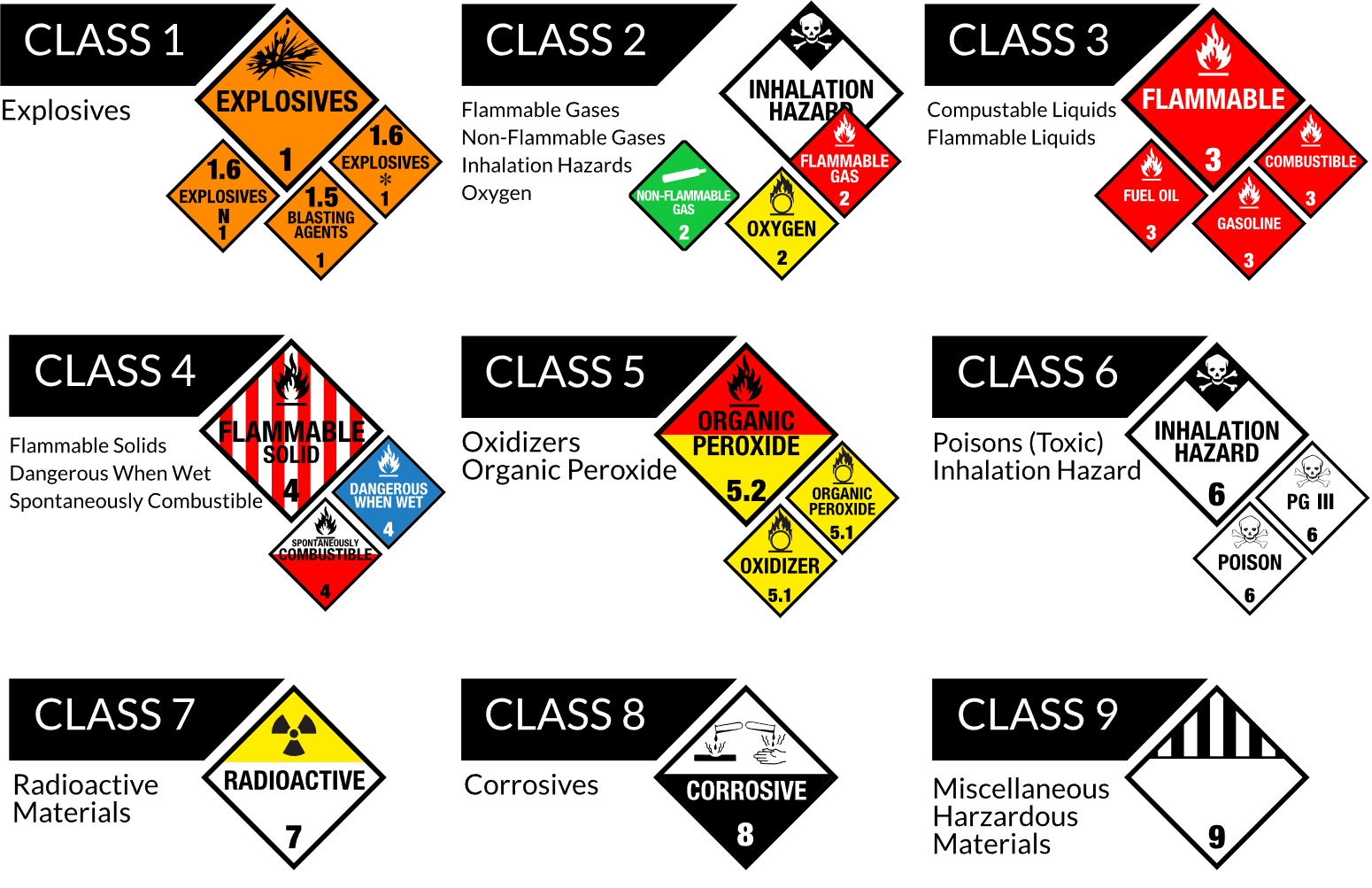
If you are unsure whether your material qualifies as dangerous goods, contact EH&S before scheduling any shipment.
Shipping
Are there materials the university cannot ship at all?
Yes. Certain materials are prohibited from shipment or require special authorization not typically held by universities:
- Select agents and toxins without CDC/USDA authorization
- Type B radioactive quantities without specialized packaging and NRC approval
- Explosive materials (Class 1) without ATF licensing
- Banned or embargoed materials under export control (EAR, ITAR)
- Controlled substances without DEA authorization
Contact EH&S early — some authorizations require weeks or months to obtain.
What is UTEP's standard schedule for dangerous goods pick up?
UTEP coordinates dangerous goods pickups Monday through Wednesday only. This window is intentional — it ensures shipments reach their destinations before the weekend, reducing the risk of packages sitting unattended in a carrier facility.
Permit requests must be submitted to EH&S at least 48 hours in advance of the desired pickup day. Requests submitted after Wednesday will be scheduled for the following Monday at the earliest
International Shipments
I need to ship materials internationally. What do I do first?
Step 1 — Contact UTEP Export Control.
All international shipments of research materials, equipment, or data may be subject to Export Administration Regulations (EAR) or International Traffic in Arms Regulations (ITAR). You must obtain clearance from the Export Control office before shipping, link below.
UTEP - Export Control
Export control Phone |
Export control Email |
| (915) 747-7812 | exportcontrol@utep.edu |
Step 2 — Contact EH&S.
Once export clearance is confirmed, EH&S will help you classify the shipment, prepare the Shipper’s Declaration for Dangerous Goods (if required), and ensure IATA-compliant packaging and labeling.
EH&S Phone |
EH&S Email |
| (915) 747-7124 | eh&s@utep.edu |
Do not ship internationally without Export Control clearance. Non-compliance can result in federal penalties for you and the university.
My shipment is covered by an MTA. Do I still need Export Control clearance?
Use a Material Transfer Agreement (MTA) or Data Use Agreement (DUA) when transferring materials, data, or software to or from collaborators. Please contact UTEP’s Office of Sponsored Projects (OSP) Contracts & Agreements team at MTA@utep.edu to establish the appropriate agreement prior to shipping or receiving any items.
Dry ice shipments
I'm shipping a sample on dry ice. Does dry ice count as dangerous goods?
Yes. Dry ice (solid carbon dioxide) is classified as a Class 9 dangerous good under both IATA regulations and U.S. DOT rules (UN 1845, Dry Ice). This applies even if the primary contents of the package are not themselves classified as dangerous.
Before shipping with dry ice you must:
- Contact EHS to complete a Shipment Permit.
- Allow EHS to assist with packaging. The container must be vented and rated for dry ice.
- Apply required labels: a UN 1845 label and the net weight of dry ice must appear on the outside of the package.
- Notify your carrier. FedEx and UPS have specific dry ice handling requirements and per-package quantity limits.
Shipping dry ice in a sealed, non-vented container is a safety hazard and a regulatory violation. Always contact EH&S first.
How much dry ice can I include?
Dry ice is classified as Class 9 — Miscellaneous Dangerous Goods (UN 1845) under IATA regulations. The standard limit for cargo aircraft is 200 kg per package, but individual airline and shipper agreements may impose lower thresholds. Always confirm limits with EH&S before packing.
Packages must be marked with the UN 1845 label, net weight of dry ice, and shipper/consignee information. Packaging must allow for CO₂ gas venting to prevent pressure buildup.
Shipping liquid nitrogen via commercial carriers (FedEx, UPS) is in most cases not feasible. Liquid nitrogen is classified as a Class 2.2 non-flammable gas (UN 1977) and requires cryogenic-rated pressure vessels with pressure relief valves. Most air carriers prohibit liquid nitrogen entirely.
If your research requires shipping a sample stored in liquid nitrogen, the recommended approach is to transfer the sample to dry ice for shipment and have the recipient re-submerge it on arrival.
Contact EH&S before attempting to ship any liquid cryogen. Attempting to ship liquid nitrogen via a standard courier is a serious safety and regulatory violation.
Biological materials
What is the difference between UN 2814 and UN 3373?
Both UN numbers apply to biological substances, but at different risk levels:
| UN Number | UN 2814 - Category A | UN 3373 - Category B |
|---|---|---|
| Risk level | Life-threatening disease in healthy humans | Does not meet Category A criteria |
| Examples | Ebola virus, Rabies virus, SARS-CoV-2 isolates | Clinical specimens, cell cultures, most diagnostic samples |
| Packaging | IATA P650 — triple packaging required | Triple packaging (equivalent to P650) |
| Shipper’s Declaration | Required | Not required |
| Training | Mandatory IATA DG certification | Recommended; EH&S can assist |
EH&S will help you determine the correct classification for your material before preparing any documentation
I'm shipping a select agent or toxin. What's the process?
Select agents and toxins are regulated by the CDC/USDA Federal Select Agent Program in addition to IATA and DOT rules. Shipping them requires specific federal authorization and institutional registration.
Before any select agent can be shipped from UTEP:
- Confirm the receiving institution is a registered select agent entity.
- Complete a Form 2 (transfer of select agent) through the federal eSelect Agent portal.
- Receive written federal program approval before shipping.
- Coordinate with UTEP’s Responsible Official (RO) and EH&S for packaging and documentation.
Shipping a select agent without federal transfer approval is a federal crime. Contact EH&S and your Responsible Official before taking any steps to prepare the shipment.
Chemical Materials
How do I determine if my chemical requires hazmat classification?
Consult the chemical's Safety Data Sheet (SDS), Section 14 (Transport Information). The SDS will indicate:
- UN number (e.g., UN1090 for acetone)
- Proper shipping name
- Hazard class and packing group (I, II, or III)
- Whether it's regulated by DOT/IATA/IMDG
If Section 14 lists "not regulated" — verify this matches your actual quantity and concentration. Some chemicals become regulated above threshold quantities.
Are small quantities of chemicals exempt from hazmat rules?
Sometimes. DOT and IATA provide limited quantity (LQ) and excepted quantity (EQ) provisions that reduce requirements for small amounts:
- Limited quantities — reduced marking and packaging requirements; still requires inner/outer packaging limits
- Excepted quantities — very small amounts (typically mL-scale) exempt from most requirements with special marking
Eligibility depends on hazard class, packing group, and transport mode. EH&S can confirm whether your shipment qualifies. Do not assume LQ/EQ without verification.
Radioactive Materials
Can I ship radioactive materials with dry ice?
Yes, but both hazards must be declared. Dry ice (UN1845) and radioactive material each have separate:
- UN numbers and proper shipping names
- Labeling requirements
- Quantity declarations on shipping documents
Carriers apply the most restrictive requirements when multiple hazard classes are present. EH&S must review any combined RAM + dry ice shipment.
General
What is the EH&S Shipment Permit and when do I need one?
The EH&S Shipment Permit is an internal UTEP form that authorizes the preparation and dispatch of a dangerous goods shipment. A permit is required when shipping:
- Biological materials (any category, including Category B / UN 3373)
- Chemical substances classified as hazardous under IATA or DOT
- Dry ice, regardless of package contents
- Radioactive materials
- Any material that requires a Shipper’s Declaration for Dangerous Goods
Allow 5 business days for EH&S to review your request, assist with packaging, and prepare required documentation. Do not schedule a carrier pickup before receiving permit approval.
Do I need to be trained to ship dangerous goods?
Yes. IATA regulations and U.S. DOT regulations both require that anyone who prepares, signs, or offers dangerous goods for transport must be trained and certified. At UTEP, EH&S staff hold the required dangerous goods training certifications.
This is why you must work through EH&S for any dangerous goods shipment. You should not independently prepare or sign shipping documentation without this training.
If your research involves frequent dangerous goods shipments and you would like to become personally certified, contact EH&S about available IATA training programs. IATA certification must be renewed every 24 months.
Even with personal training, UTEP researchers must still coordinate with EH&S and obtain a Shipment Permit before shipping. Training does not replace the institutional permit process.
Which carriers does UTEP use for dangerous goods?
EH&S works primarily with FedEx and UPS for dangerous goods shipments. Key points:
- FedEx: Accepts dry ice, UN 3373 biological substances, and most Class 6.2 shipments. Requires a FedEx dangerous goods account and shipper’s certification for Category A (UN 2814).
- UPS: Similar capabilities. Dry ice shipments must have net weight marked on the outside of the package.
- USPS: Cannot be used for most dangerous goods, including dry ice and biological substances. Do not use USPS for hazardous materials without consulting EH&S.
EH&S will arrange or confirm carrier selection as part of the permit process. Do not contact a carrier directly for dangerous goods without EH&S involvement.
What happens if a carrier rejects my package?
If a carrier rejects a package, it is almost always because the shipment was not properly declared, labeled, or packaged for dangerous goods. Consequences can include:
- The package being returned to sender with delays and potential damage to material.
- A report filed with the DOT or FAA, which can result in fines to the university and the individual researcher.
- Restrictions on future shipments from UTEP’s carrier accounts.
If your package is rejected: contact EH&S before attempting to re-ship. EH&S will assess what went wrong, prepare the shipment correctly, and resubmit through proper channels.
Undeclared dangerous goods — packaging a hazardous material without identifying it to the carrier — is a federal offense under 49 CFR 171.2, regardless of intent.
My shipment is time-sensitive - can I expedite the permit review process?
Contact EH&S directly by phone as soon as you know a time-sensitive shipment is needed.
The standard 48-hour permit requirement exists to allow adequate time for documentation review, packaging verification, and carrier coordination. This minimum cannot be waived — attempting to ship dangerous goods without a valid permit violates DOT and IATA regulations and may result in serious institutional and personal liability.
To give your urgent shipment the best chance of going out on schedule:
- Reach out to EH&S as soon as a time-sensitive need is identified — even before your permit form is complete.
- Have your SDS, UN number, packing group, quantity, and recipient information ready when you call.
- Confirm the next available pickup day in UTEP's Mon–Wed window and work backward from there.
- For biological specimens (Category A or B), ensure your PI has pre-authorized the shipment and IBC documentation is current.
EH&S will make every reasonable effort to accommodate urgent requests, but regulatory minimums are non-negotiable. Early communication is the single most effective tool for time-sensitive shipments.
Does EH&S observe reduced hours during university holidays, and how does that affect my permit?
Yes. EH&S offices follow the UTEP academic calendar, which means permit processing may be unavailable on university holidays. Permits submitted during a closure period will not be processed until offices reopen, and the 48-hour review clock does not begin until EH&S receives and acknowledges the request on a business day.
Plan accordingly by building in an extra buffer of at least 2–3 business days before any holiday period. If your shipment was originally planned for a holiday week and pickup is no longer feasible, notify EH&S promptly to reschedule rather than attempting to ship without a valid permit.
Packaging
What information does EH&S need from me to package my dangerous goods shipment correctly?
Packaging requirements for dangerous goods are determined by the nature of the material being shipped, and no two shipments are necessarily the same. To ensure full compliance with DOT and/or IATA packaging regulations, EH&S will require the following information prior to processing your request:
- Material name (chemical, biological, or radiological)
- Quantity and unit of measurement
- Physical state (solid, liquid, or gas)
- Concentration or activity level (if applicable)
- Intended destination (domestic or international)
- Shipping method (ground or air)
- Any special handling instructions or sensitivities
Providing this information upfront helps EH&S select the appropriate UN-specification packaging, apply the correct labels and markings, and prepare the required shipping documentation — keeping you, the carrier, and the recipient safe throughout the process.
Can I use any box or container to ship dangerous goods?
Can I reuse packaging from a previous dangerous goods shipment?
Who is responsible for purchasing the required packaging for my shipment?
Are there special packaging requirements for shipments containing dry ice?
Is there special packaging required for biological materials?
What is the triple packaging method and when is it required?
Contact EH&S
To request a Shipment Permit:
1. Fill out the following permit, link below
2. Please submit permits at least 48 hours in advance for EH&S review and material preparation; this does not guarantee the shipment date. Allow 5 business days for permit processing.
3. Do not schedule a carrier pickup until your permit is approved.
EH&S Phone |
EH&S Email |
| (915) 747-7124 | eh&s@utep.edu |


